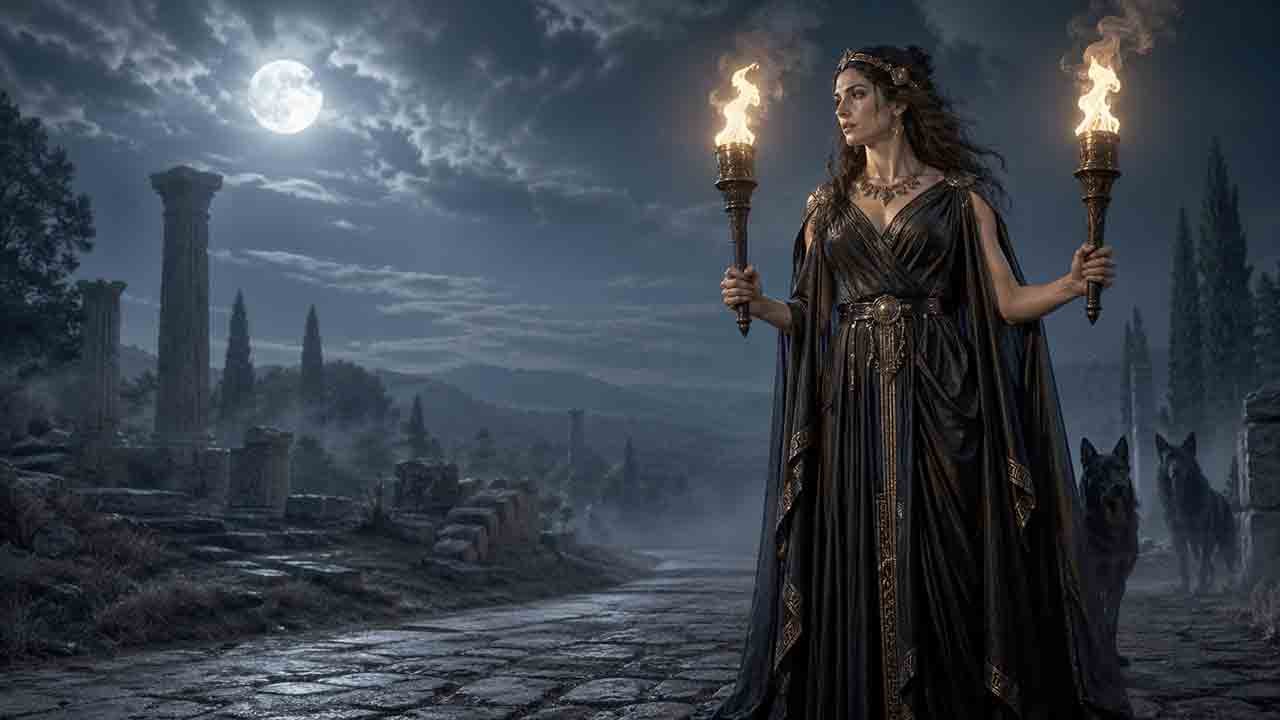

Linked to dark rituals, crossroads and the world of spirits, Hecate remains one of mythology’s most feared and mysterious figures.
By Aelios Varro
Long before modern stories turned witches into icons of fantasy and fear, one name already inspired dread in the ancient world: Hecate. Known by many as the Queen of Witches, she was not just another goddess from mythology. She was a figure surrounded by darkness, secret rites and powers believed to cross the boundary between the living and the dead.
In ancient tradition, Hecate was deeply connected to the night, to magic and to places people feared to cross alone. She was the goddess of crossroads, shadowy paths and spiritual thresholds, the kind of places where the ancient imagination believed strange forces were strongest. That alone was enough to make her one of the most unsettling deities of the old world.
Her symbols only strengthened that reputation. Hecate was often depicted carrying torches, holding keys and accompanied by dogs, especially in scenes tied to darkness and ritual. The torches suggested she could move through the unseen. The keys hinted that she had access to mysteries hidden from ordinary people. And the dogs were seen as creatures capable of sensing spirits long before humans could.
Over time, her image became even darker. Hecate was increasingly associated with witchcraft, curses, ghosts and forbidden rites, transforming her into the ultimate mythological symbol of occult power. It is this evolution that helped cement her legendary title as the Queen of Witches, a name that still sparks curiosity today.
But what makes Hecate so fascinating is that she was never portrayed as simple. She could protect, guide and warn, but she could also be invoked in rituals linked to fear, revenge and the spirit world. That mix of protection and terror made her one of the most powerful and unforgettable figures in ancient religion.
Even now, Hecate continues to appear in books, series, occult traditions and online discussions about hidden knowledge and ancient goddesses. Her legend refuses to disappear. For some, she represents wisdom and feminine power. For others, she remains a chilling reminder of how the ancient world understood the supernatural.
That may be why Hecate still commands attention after so many centuries. She is more than a name from myth. She is a symbol of the unknown, of the dangerous and of the secrets people have always feared to uncover.