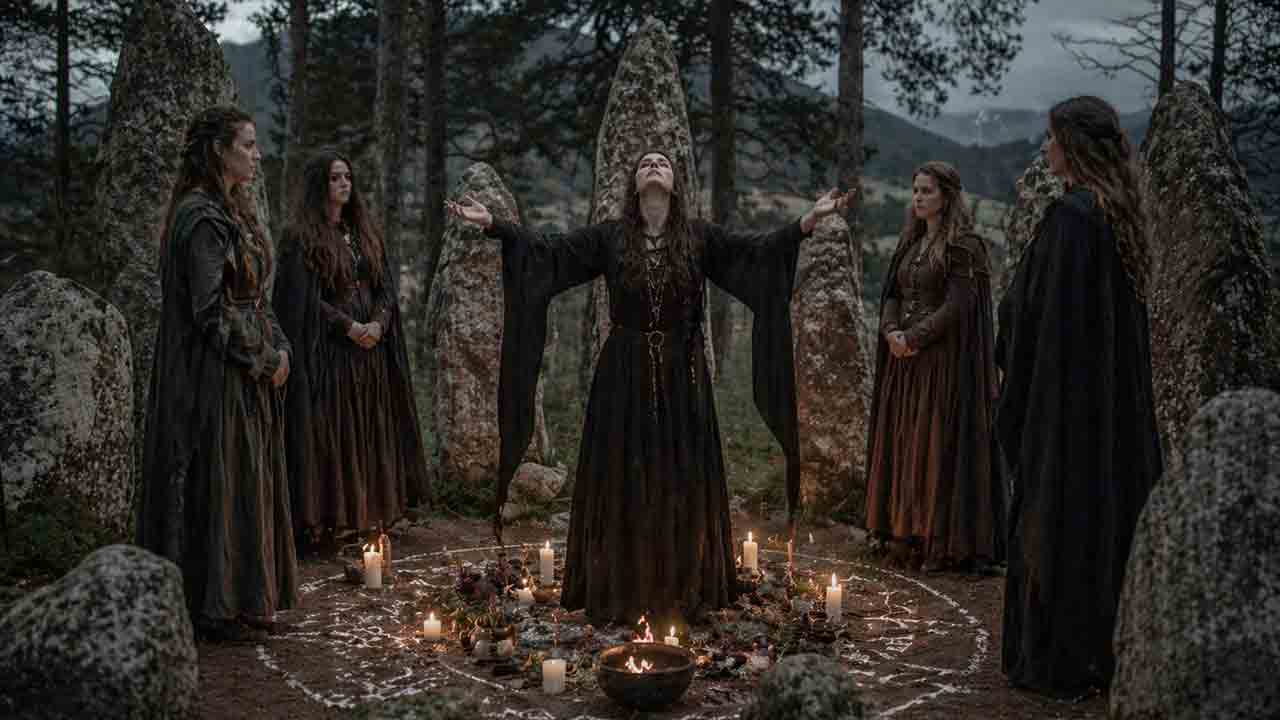
Candles, whispered prayers, herbs, symbols, and accusations of dark pacts helped create one of the most feared figures in European history.
By Aelius Varro
The image of the witch gathered at night in secret ceremonies, surrounded by candles and forbidden words, has crossed the centuries and continues to fuel the popular imagination. But behind this dark portrait lies an even more intriguing story: how fear, religion, superstition, and accusations transformed popular practices into signs of a supposed invisible evil.
In the Middle Ages, many people turned to prayers, amulets, herbs, and ancient formulas to seek protection, ward off illness, attract love, or try to explain the unexplainable. In villages and isolated communities, these customs could seem natural. The problem began when those same practices came to be seen as a threat.
It was in this climate of fear that the figure of the “witch” emerged as someone linked to secret rituals and hidden powers. A failed harvest, a sudden illness, or a series of tragedies could be enough for suspicion to fall on women considered different, solitary, or knowledgeable in traditional lore. Little by little, what had once been popular practice began to be described as something sinister.
Over time, the stories grew even darker. Religious authorities and courts began spreading the idea of nocturnal gatherings, hidden ceremonies, and pacts with evil forces. In this way, the supposed ritual of witchcraft ceased to be merely an act of superstition or folk magic and became a symbol of heresy, terror, and persecution.
What is most disturbing is that many of these rituals may never have existed in the way they were described. Historians point out that much of this imagery was built by accusers, reinforced by collective fear, and expanded through confessions extracted under pressure. In other words, the medieval witch ritual may often have been less a proven fact than a powerful invention capable of destroying lives.
Even so, the fascination remains. Perhaps because these stories reveal far more than supernatural beliefs. They show how the unknown can be turned into a threat and how mystery, when fed by panic, can create monsters that survive to this day in the world’s imagination.